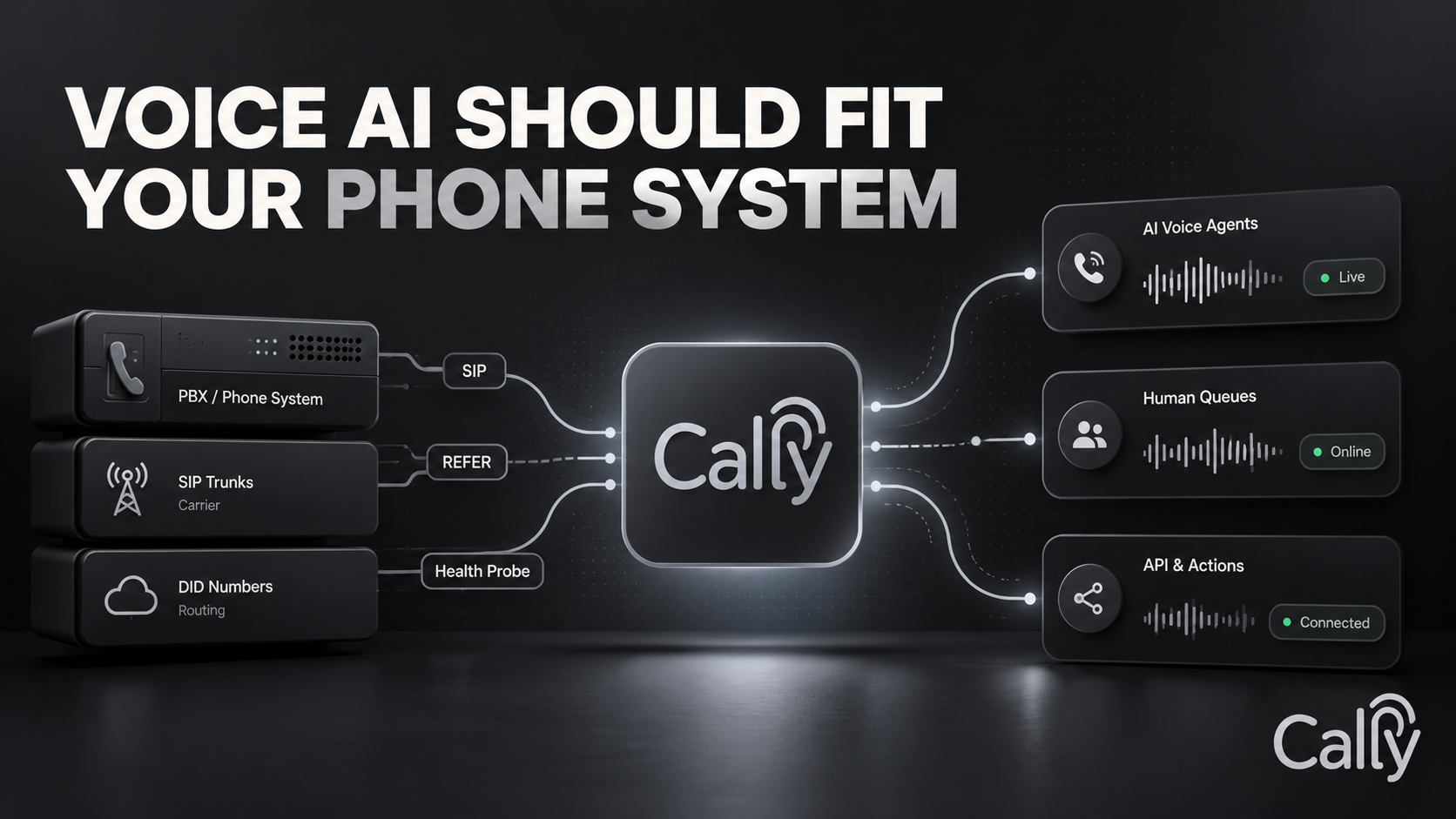
Enterprise telephony is rarely a blank sheet
Companies already have phone numbers, carriers, PBXs, queue logic, extensions, compliance processes, and routing conventions. A voice AI platform that only works with its own isolated phone stack can turn a small automation project into a large telephony migration.
SIP is the integration layer
Cally uses a native PJSIP telephony core and supports third-party SIP trunks through bring-your-own-trunk configuration. The feature sheet names providers and systems such as Netgsm, Asterisk, and FreePBX, with digest authentication and keep-alive heartbeats. This lets the AI layer participate in existing voice infrastructure rather than requiring every company to rebuild around a new carrier.
Inbound routing should be tenant-aware
Cally can route incoming SIP calls to the matching agent based on the dialed number across multiple workspaces. That allows different DIDs to map to different agents, departments, languages, or customers while using the same platform infrastructure.
Connectivity should be testable before launch
Cally includes SIP trunk probing for UDP/TCP OPTIONS reachability. A probe does not guarantee every audio condition will work, but it catches basic signaling and network problems before a number is assigned to production traffic. Telephony failures are easier to fix when they are isolated from the AI behavior.
Transfers need to stay native
When the AI needs a human, Cally can issue SIP REFER to an existing PBX queue, extension, or external DID. That keeps the existing contact-center destination in the architecture instead of creating a separate human-support system just for AI calls.
The easiest voice AI pilot is the one that respects the telephony decisions you have already made.