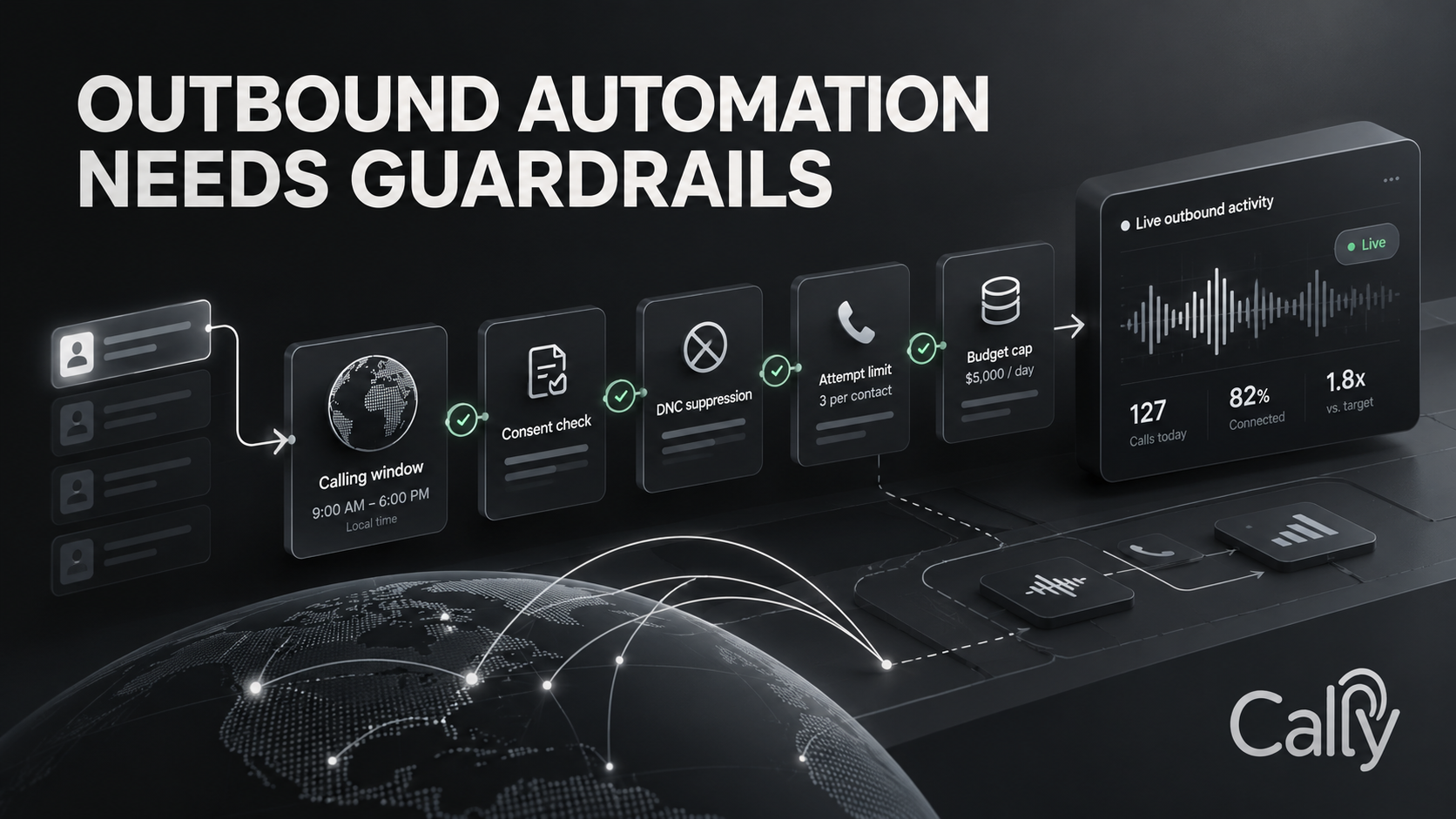
Outbound voice automation magnifies both efficiency and mistakes
An inbound agent waits for a customer to initiate contact. An outbound dialer actively creates conversations at scale. That means bad audience data, wrong calling times, repeated attempts, or missing consent can become operational problems very quickly.
Campaign configuration should expose the controls
Cally’s campaign wizard brings the major choices into one flow: agent, caller ID, audience, dialing schedule, pacing, and budget. The platform can import CSV audiences, normalize phone numbers, deduplicate contacts, and pass custom fields to the AI as context.
Guardrails should be machine-enforced
The feature sheet includes configurable daily calling windows, recipient timezone detection, national do-not-call checks, maximum daily attempts, and consent verification. The exact legal requirements vary by jurisdiction and use case, but the product principle is universal: compliance rules should be represented as execution constraints, not merely written in an operations document.
Pacing protects both customers and infrastructure
A background pacing engine controls calls per minute, dispatch leases, retry delays, and budget cutoffs. This prevents a campaign from turning a large CSV into an uncontrolled burst. It also lets operations teams match dialing volume to downstream capacity such as human handoff queues.
Monitoring closes the loop
Cally’s live campaign view can show in-flight calls, answer rate, conversion metrics, failures, and agent status. Results are written to a durable local outbox before cloud delivery, reducing the chance that summaries or recordings disappear during a network interruption. Operational reliability matters just as much after the call as before it.
Before the first outbound call, define the allowed audience, allowed hours, maximum attempts, consent basis, and human escalation capacity. Scale comes after those rules are executable.