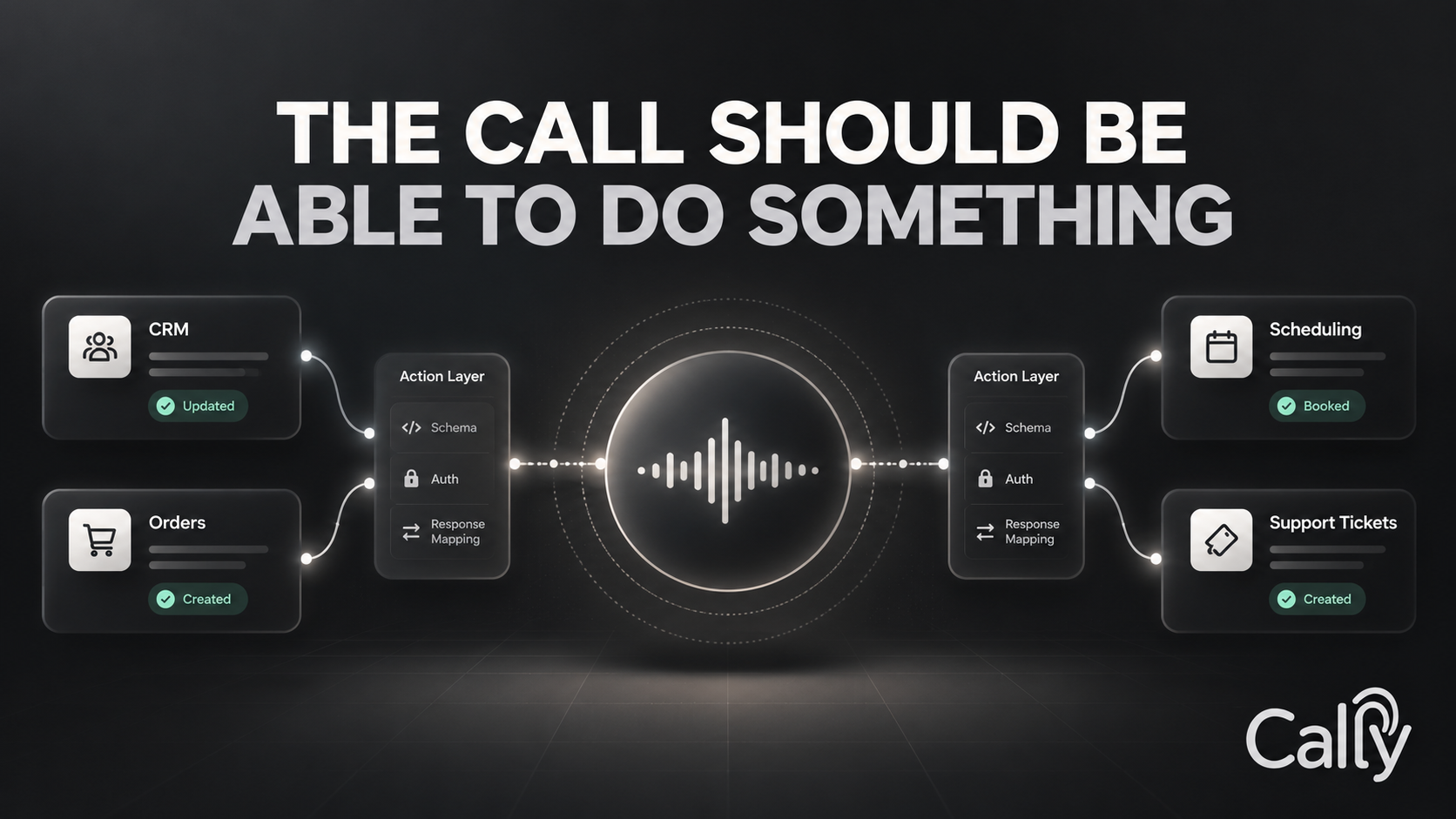
Information alone does not complete a process
A caller rarely phones just to hear a paragraph. They want an outcome: check something, change something, schedule something, cancel something, or reach the right person. This is where function calling becomes the practical bridge between conversation and operations.
An action should be a defined contract
Cally’s visual action builder lets teams configure trigger topics, input parameters, headers, authentication, and output mappings. HTTP actions can use GET, POST, PUT, or DELETE, with typed payload schemas, dynamic parameters, and JSON path selectors. The benefit of a structured action layer is that the agent does not invent how to interact with a backend; it calls a predefined tool with known inputs and outputs.
Credentials should never become conversational data
API keys and bearer tokens are infrastructure secrets, not prompt content. Cally encrypts action credentials at rest and masks stored values in the interface. Separating secret management from the agent’s conversational context reduces the chance that operators accidentally expose a credential while editing or testing an agent.
Test actions outside the live call
Cally includes an action test bench that can execute a configured action with typed inputs before it is published to live agents. This is useful for validating authentication, payload formats, response selectors, and error behavior. It also creates a clearer boundary between “the AI misunderstood” and “the backend integration is broken.”
Telemetry makes actions auditable
Every tool call should leave a trace. Cally records action execution status, duration, request parameters, response body, and the model’s interpretation. That history is valuable during quality review because it shows whether a wrong answer came from bad user input, incorrect reasoning, a failed API, or an unexpected backend response.
Start with read-only actions. Once the agent can reliably retrieve the right live data, add write actions behind explicit confirmation and strong observability.